Bangkok BTS MRT Guide: How to Ride the City's Trains
A complete Bangkok BTS MRT guide for first-time riders and new expats. Lines, Rabbit Card, MRT card, fares, hours, key interchanges, and where boats take over.
Stand on the Asoke BTS platform at 8:14 in the evening. The skytrain rolls in from the Mo Chit direction with a soft electric whine, the doors chime, a line of office workers and students fans out across the platform in one smooth movement. Forty seconds later the train pulls away over Sukhumvit Road. This bangkok bts mrt guide walks new arrivals through exactly how to use that system, plus the underground MRT, the Airport Rail Link, and the river boats that fill in the gaps.
The whole network is easier than it looks. Two main rail operators, a handful of stored value cards, and a flat etiquette rulebook that any rider learns inside a week.
The two rail systems
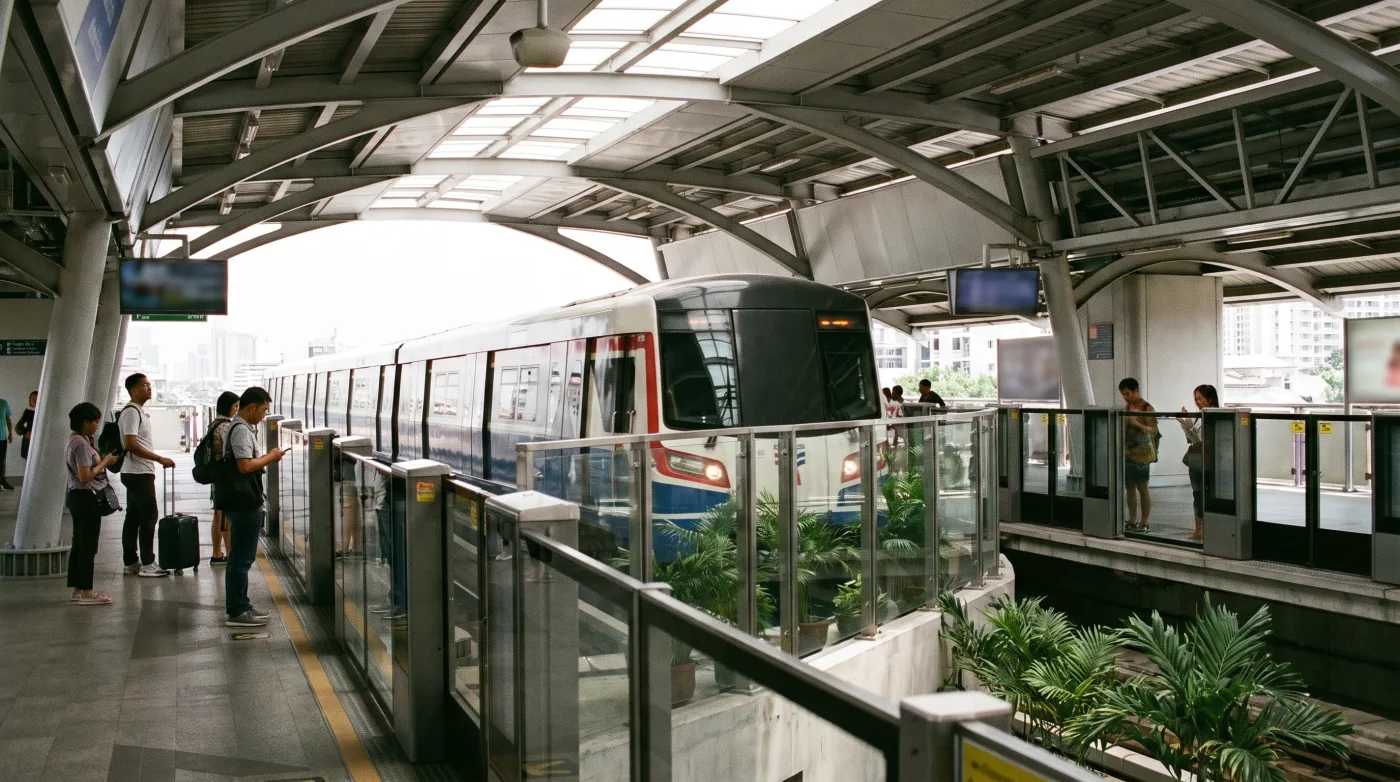
Two systems, one mental map: the elevated BTS and the underground MRT. Learn the interchanges and the city shrinks.
Bangkok runs on two distinct urban rail networks, and they connect at a few key stations but operate as separate businesses with separate fare cards.
The BTS Skytrain is the elevated system, the silver trains gliding above traffic on Sukhumvit and Silom roads. It has two lines. The Sukhumvit Line is dark green and runs from Khu Khot in the north down through Chatuchak, Asoke, Phrom Phong, On Nut, and Bearing toward Kheha. The Silom Line is light green and runs from National Stadium through Sala Daeng, Saphan Taksin, and across the river to Bang Wa. Both lines meet at Siam, the central interchange.
The MRT is the underground metro. It now runs four lines. The MRT Blue Line is the main loop, threading from Lak Song through Hua Lamphong, Sam Yan, Silom, Sukhumvit, Phetchaburi, Phra Ram 9, and back up around Bang Sue. The Purple Line connects northwest to Nonthaburi. The Yellow and Pink monorail lines opened more recently and serve the eastern and northern suburbs.
Two separate systems sit beside the BTS and MRT. The Airport Rail Link runs from Suvarnabhumi Airport into Phaya Thai in about 26 minutes, see our Suvarnabhumi to Bangkok guide for the full airport-side breakdown. The SRT Red Line connects Don Mueang Airport down to the new Bang Sue Grand Station, the country's main long distance rail hub; for that route see Don Mueang to Bangkok.
How to ride
The mechanics are simple. At any station you can buy a single journey token at the row of touchscreen vending machines near the gates. Pick your destination, drop in coins or notes, and a plastic token drops out. Tap the token at the gate to enter, drop it in the slot at your exit gate to leave.
Stored value cards are the better path. Tap in, tap out, the fare deducts automatically from the card balance. You skip the queue at the token machines every single trip.
The etiquette is consistent. Stand on the right of the escalators, walk on the left. Let passengers off the train before boarding. No eating, no drinking, no durian inside stations or trains. Bags off the seat at busy times. Priority seats at the end of each carriage are for monks, elderly riders, pregnant women, and people with disabilities.
The Rabbit Card
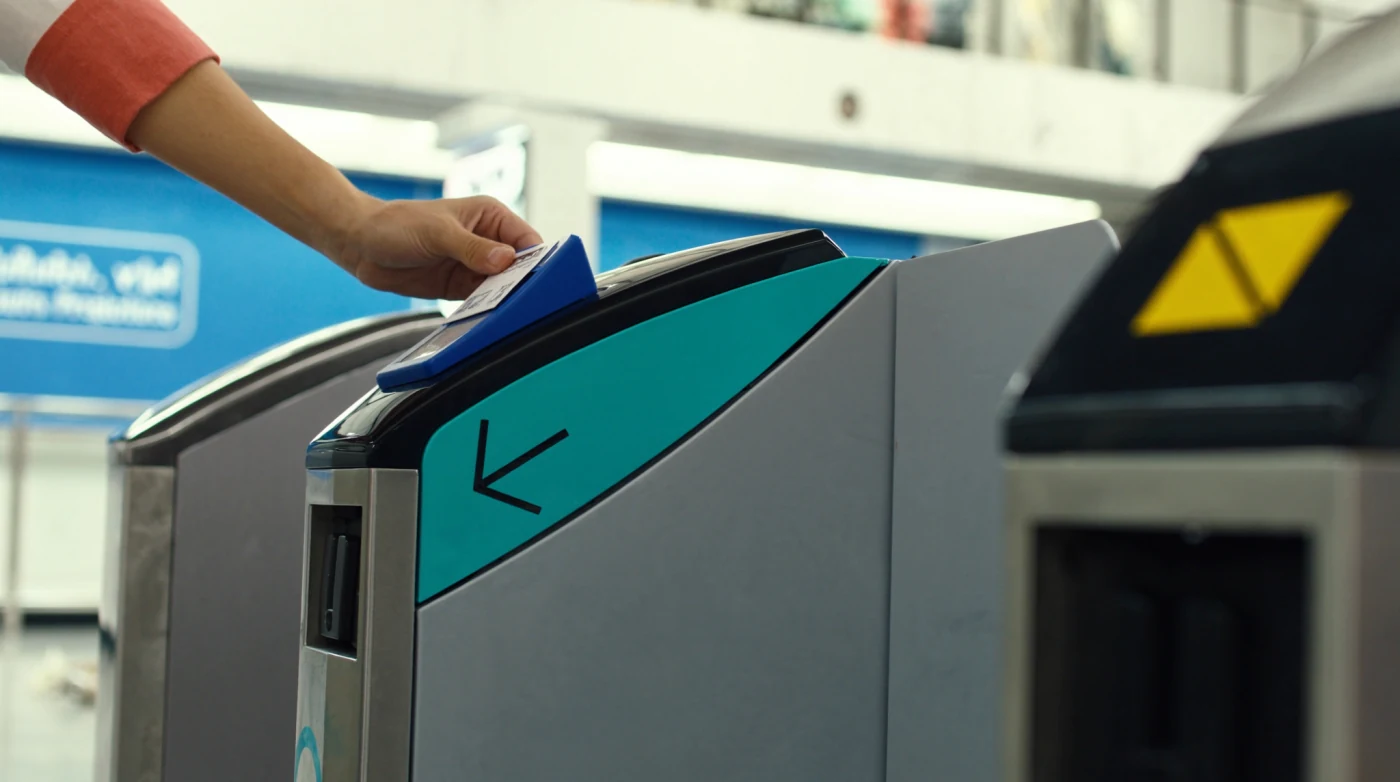
Tap in and tap out. The card saves you the queue at the machine every single ride.
The Rabbit Card is the BTS stored value card and the one most expats use day to day. A new card costs 200 baht at any BTS ticket office, which breaks down as a 100 baht refundable deposit and 100 baht of stored value to start. Top up at the same office, or at the value adding machines next to most ticket booths.
The Rabbit network reaches beyond the BTS gates. You can tap it at Bangkok Mass Transit shops inside stations, at many McDonald's outlets, at participating Starbucks branches, and at a growing list of convenience retailers. Treat it as a contactless wallet for small purchases on the way to work.
Browse all Bangkok neighborhoods on BGM → Start with Sukhumvit and Silom, the two areas the BTS serves most densely.
The MRT card and contactless
The MRT runs its own stored value card, separate from the Rabbit. A new MRT card costs 230 baht, which covers a 50 baht deposit and 180 baht of stored value. You buy it at the customer service window inside any MRT station.
Since 2022 the MRT also accepts contactless Visa and Mastercard at most Blue Line gates. Tap a contactless bank card or a phone wallet at the EMV gate, ride, tap out, and the fare posts to the card. For short visits this is the simpler choice. For residents the dedicated MRT card still wins on fee predictability.
Fares and hours
Fares are distance based and stay in a tight range across both systems.
- BTS Skytrain: 17 to 62 baht per trip
- MRT Blue Line: 17 to 45 baht per trip
- Airport Rail Link: 15 to 45 baht per trip
Both BTS and MRT run from about 6 AM to midnight daily, including weekends and public holidays. Trains arrive every 3 to 6 minutes at peak hours and every 6 to 10 minutes off peak. After midnight the network closes. Grab, Bolt, taxi, and motorbike taxi take over the late shift.
Key interchanges to memorize
Three station pairs do the heavy lifting between the two networks.
- Asok (BTS Sukhumvit Line) connects to Sukhumvit (MRT Blue Line). The walk between gates is about three minutes through a covered bridge above Asok intersection.
- Sala Daeng (BTS Silom Line) connects to Silom (MRT Blue Line). Same idea, short covered walk at street level.
- Mo Chit (BTS Sukhumvit Line) connects to Chatuchak Park (MRT Blue Line). The handover for Chatuchak Weekend Market trips.
Two more interchanges matter. Siam is the BTS internal interchange between Sukhumvit Line and Silom Line. Phaya Thai connects the BTS Sukhumvit Line to the Airport Rail Link for Suvarnabhumi runs.
Where the trains do not reach
The BTS and MRT cover the spine of central Bangkok, but several high traffic destinations sit off the grid.
Khao San Road and the wider Banglamphu backpacker district have no direct rail station. The closest stop is Sanam Chai on the MRT Blue Line, which puts you about a 10 to 15 minute walk from the main strip, or a short tuk tuk hop. Parts of Thonburi, the older neighborhoods west of the Chao Phraya River, also sit beyond easy train access. For those trips a boat or a Grab is the standard expat answer.
The Chao Phraya Express Boat
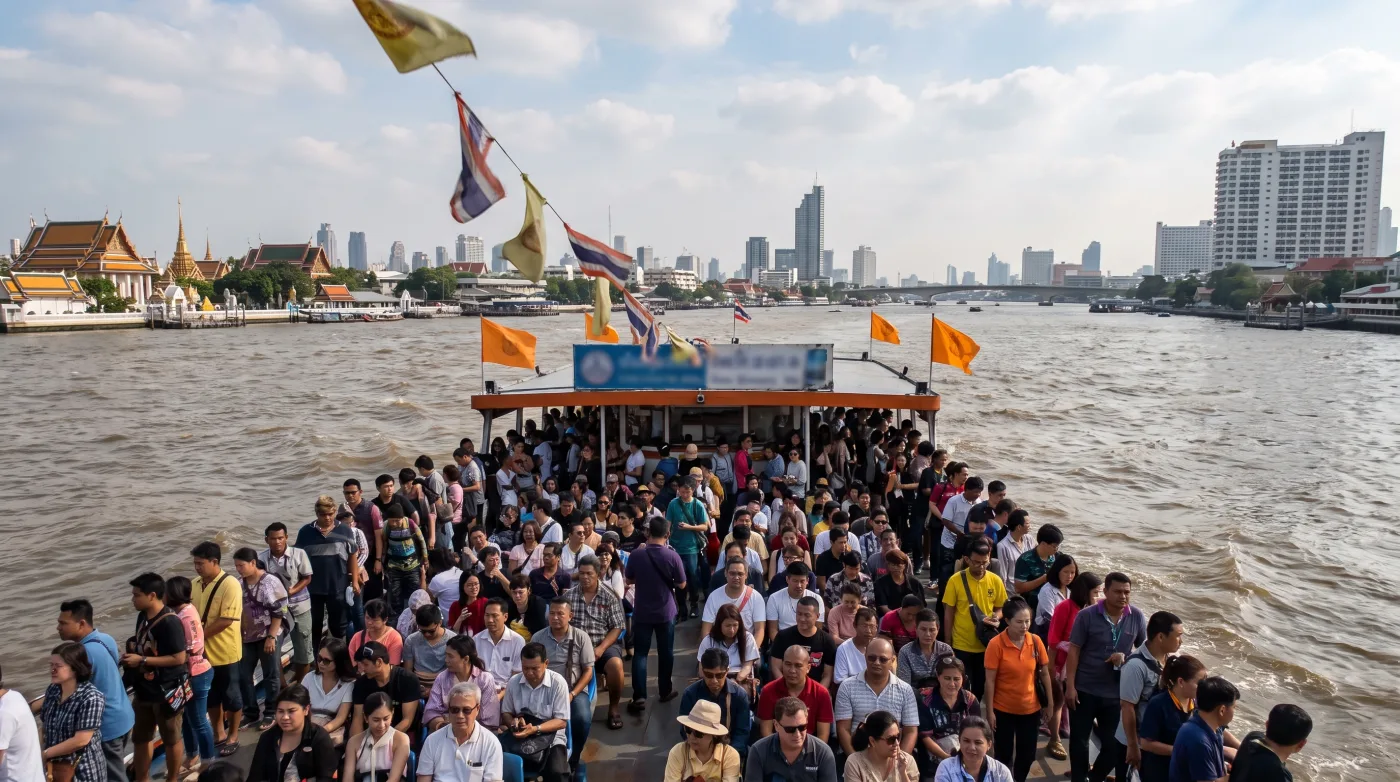
The orange-flag express boat is public transport that doubles as the best cheap river tour in the city.
The river complements the trains for the historic core. Chao Phraya Express Boat services run a flag based system from Nonthaburi in the north down past the Grand Palace, Wat Pho, Wat Arun, and on to Sathorn Pier, which connects directly to Saphan Taksin BTS on the Silom Line.
- Orange flag boat: all stop, the workhorse line, around 16 baht flat fare
- Blue flag tourist boat: limited stops at the main temples and River City, hop on hop off style ticket
- Green and yellow flag express boats: peak hour commuter services
The boat is the right move for a temple day. Take the BTS to Saphan Taksin, walk to Sathorn Pier, and ride the orange flag north. It is faster than a taxi during midday traffic and the view does most of the work.
How residents actually move
Settled expats build a daily routine around three modes stacked together. BTS or MRT covers the long distance backbone. A walk of 5 to 10 minutes from the station to the destination handles the last leg. Grab fills in for anything past the grid, late nights, heavy rain, or trips with multiple stops.
A typical Sukhumvit week looks like this. Office commute on the BTS. Lunch within a 10 minute walk of Asoke or Phrom Phong. Dinner in Thonglor, two stations east. Weekend market run on the MRT Blue Line to Chatuchak Park. River trip on the Chao Phraya Express Boat for a temple morning. The whole rhythm sits on a single tap card and runs cleaner than driving.
FAQ
Do I need separate cards for BTS and MRT in Bangkok? Yes. The Rabbit Card works on the BTS Skytrain. The MRT uses its own stored value card, and since 2022 also accepts contactless Visa and Mastercard at most gates.
How much does a Rabbit Card cost? A new Rabbit Card costs 200 baht at any BTS ticket office. That covers a 100 baht refundable deposit and 100 baht of stored value to start riding.
What are BTS and MRT operating hours? Both systems run from about 6 AM to midnight daily, including weekends and public holidays. Off peak trains run every 6 to 10 minutes.
Where do the BTS and MRT connect? The main interchanges are Asok with MRT Sukhumvit, Sala Daeng with MRT Silom, and Mo Chit with MRT Chatuchak Park. Siam is the BTS internal interchange between Sukhumvit Line and Silom Line.
How do I reach Khao San Road by BTS or MRT? Take the MRT Blue Line to Sanam Chai, then walk 10 to 15 minutes north, or finish the trip by tuk tuk or Grab. The Chao Phraya Express Boat from Sathorn Pier is a strong alternative.
Start here
Buy a Rabbit Card on day one. That is your standard tap and go for the next two weeks while you learn the lines, find your interchanges, and figure out which exit at Asoke gets you closest to your office. Add an MRT card or a contactless bank card the first time you need the Blue Line. Once those two cards are in your wallet, the rest of the network opens up.
Find places near a BTS or MRT stop on BGM → Explore the travel category, or jump to the venue map to filter by station. For Bangkok's road options (Grab, taxis, motorbike taxis, boats) see our how to get around Bangkok guide.