Street Food Chinatown Bangkok: What to Eat on Yaowarat Road
Where to eat on Yaowarat Road: 7 Chinatown street food stops from Michelin-listed woks to dessert cafes, plus timing, queue tactics, and a one-night route.
Yaowarat Road after dark is the single best street food strip in Bangkok, and arguably in Asia. When the neon signs flick on around 6pm, the sidewalks of Chinatown turn into a kilometer-long open kitchen: wok flames, charcoal grills, steam baskets, and queues that tell you exactly where to eat. This guide gives you seven stops worth planning around, the timing that beats the crowds, and a route that strings it all together in one night.
One logistics rule up front: take the MRT to Wat Mangkon station, exit 1. Chinatown traffic at dinner time is brutal, and the station drops you one block from the action. Bring cash; most stalls take nothing else.
What makes Yaowarat street food special
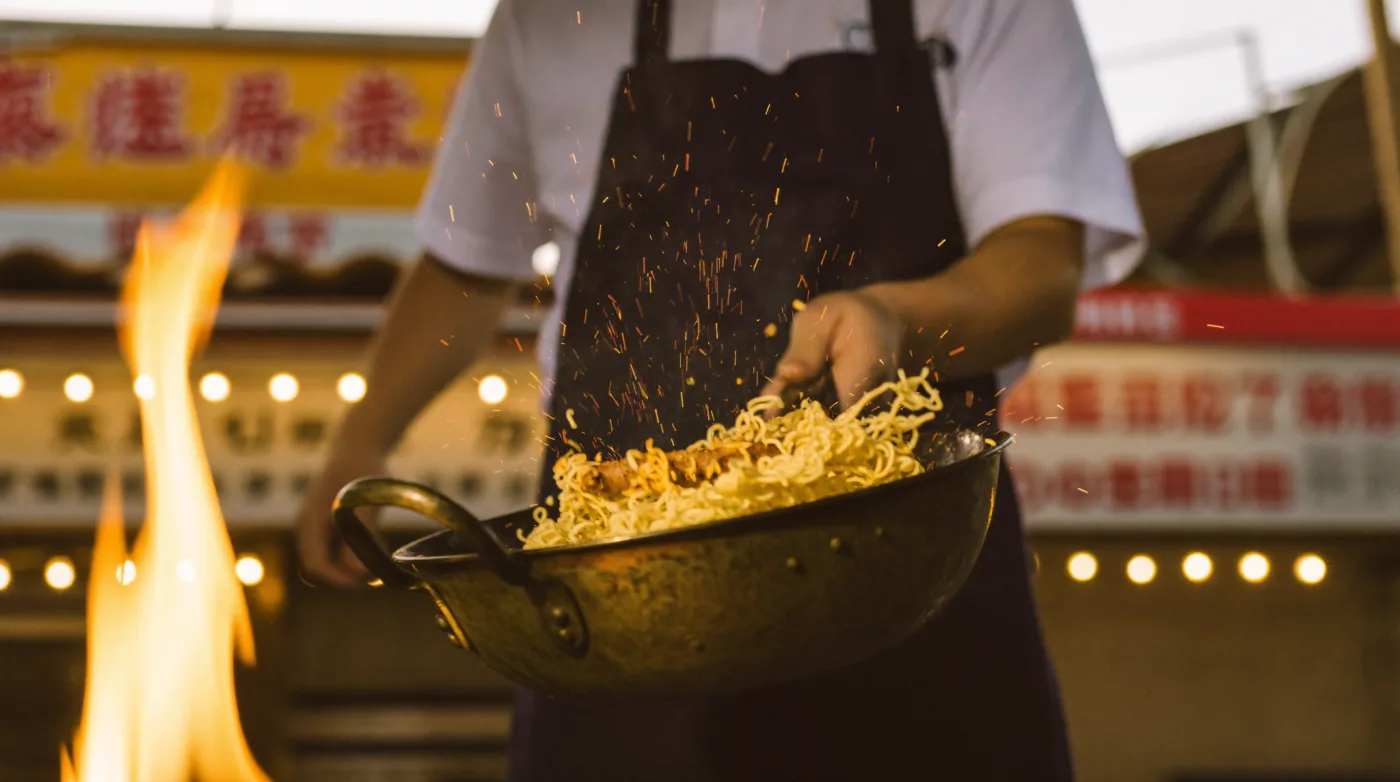
Yaowarat cooks in the open. The wok flame is the whole show, and it starts around six in the evening.
Chinatown is Bangkok's oldest neighborhood, settled by Teochew Chinese traders more than two centuries ago, and the food is the archive. This is where Thai-Chinese cooking lives: braised goose, fish maw soup, oyster omelettes, bird's nest, charcoal-toasted buns, and dim sum lineages that go back generations. Stalls here have single-dish focus refined over decades, which is why several carry Michelin Bib Gourmand listings while charging under 150 baht a plate. High turnover keeps everything fresh: nothing sits, because the queue never stops.
Fikeaw Yaowarat. The wok-flame headliner
Fikeaw Yaowarat is the stall you have seen on video even if you never knew its name: towering flames, a wok tossed in the fire, and crowds filming every batch. The name means "green flame", and the show is real, but so is the food; flash-fried seafood with smoky wok breath that only that much heat produces. Queues are the longest on this list, so make it your first stop at 5pm or accept the wait. Order the flame-fried morning glory and a seafood stir-fry, and stand back when the fire goes up.
Ba Hao Tian Mi. Chinese desserts, done seriously
Ba Hao Tian Mi is the dessert stop that converts people who think they do not like Chinese desserts. The signature is silky steamed egg pudding in flavors from original to black sesame, served in a small red-lit shophouse that nails the modern-Chinatown aesthetic. Portions are small by design, which makes it a perfect mid-route palate reset between grilled and fried courses. Expect a short queue; it moves fast.
Lhong Tou Cafe. The famous dim sum ladder seats
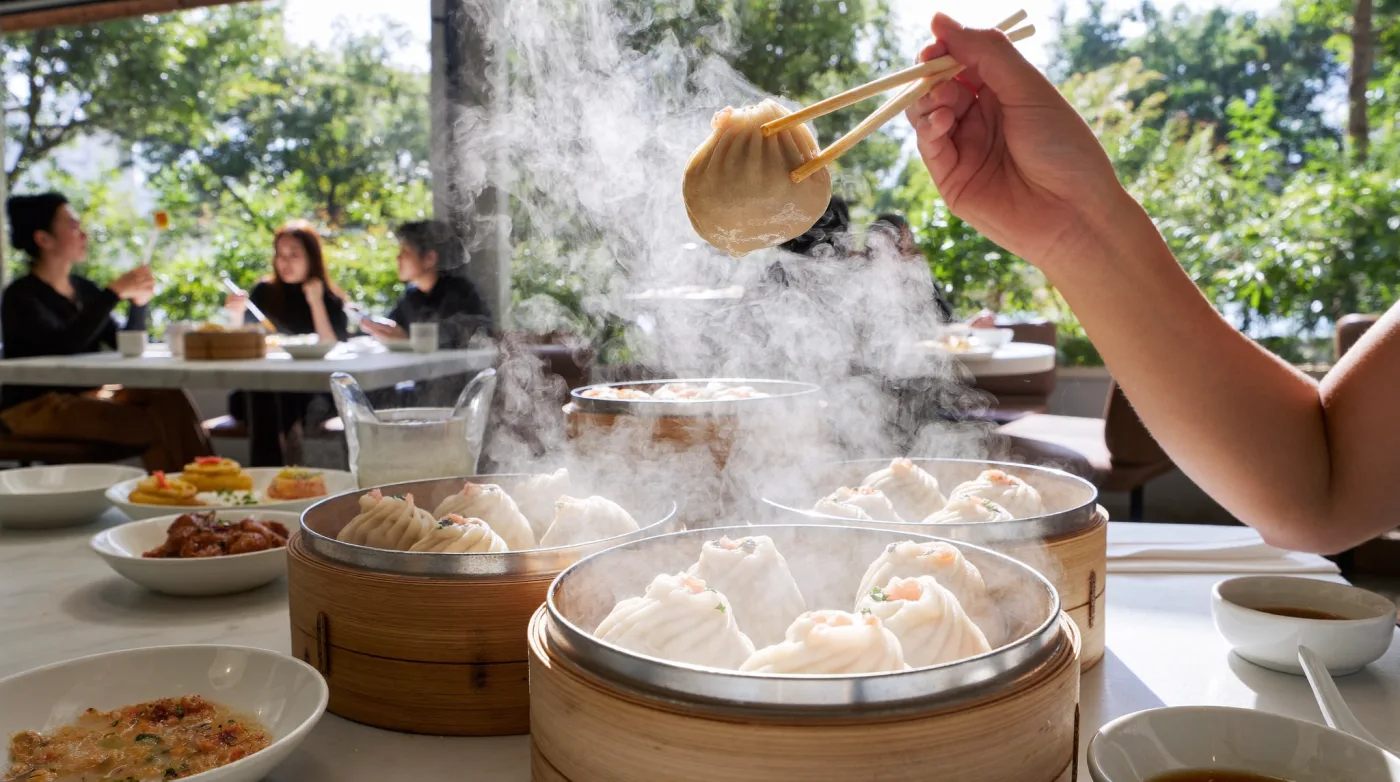
Steamers land fast and cheap. Order in rounds so everything arrives hot.
Lhong Tou Cafe went viral for its double-decker seating, and stayed relevant because the food holds up: dim sum baskets, mala-spiced bites, and Thai-Chinese breakfast sets in an interior that reimagines an old teahouse. It is the sit-down break in a night of standing and grazing, and the aircon matters more than you expect in April. Come early evening or expect a wait for the photogenic upstairs seats.
Browse all Bangkok restaurants on BGM →
Yaowarat Toasted Buns. The 30-baht queue that moves
Yaowarat Toasted Buns sells one thing: soft buns toasted over charcoal, split, and filled with your choice of spreads, the classics being sangkaya (Thai pandan custard), butter and sugar, or chili paste for the brave. The queue looks alarming and moves quickly, because the operation is drilled to a science. This is the cheapest famous bite on the strip and the right thing to eat while walking to the next stop.
Patonggo Cafe. Old Town's crispy-dough icon
Patonggo Cafe takes patonggo, the Thai-Chinese fried dough sticks usually dunked in condensed milk at breakfast, and builds a whole menu around them: classic with sangkaya dip, or dressed up into dessert plates. The shophouse sits on the Old Town edge of the Chinatown circuit, which makes it a natural bridge stop if you are walking in from the riverside or combining Yaowarat with the temples. Crisp outside, airy inside, dangerous by the plate.
Sweettime. The late-night sweet finisher
Sweettime is where you end the night: a dessert stop serving shaved-ice bowls, toast towers, and Thai-Chinese sweets that land exactly right after an hour of chili and charcoal. It runs later than the dim sum rooms, which makes it the reliable last seat when the street starts thinning out after 10pm. Share one bowl between two people; portions are built for it.
Chinatown Night Market. The graze-everything backbone
The Chinatown Night Market is not one stall but the spine of the whole experience: the vendor rows along Yaowarat and its sois where you graze between the named stops. Grilled squid, pomegranate juice pressed to order, chestnuts roasted in woks of black sand, skewers, dumplings, fruit you have never seen. The rule here is simple: queues of locals mean quality, cooked-to-order means safe, and 50 to 100 baht buys almost anything worth trying.
One-night route and queue tactics
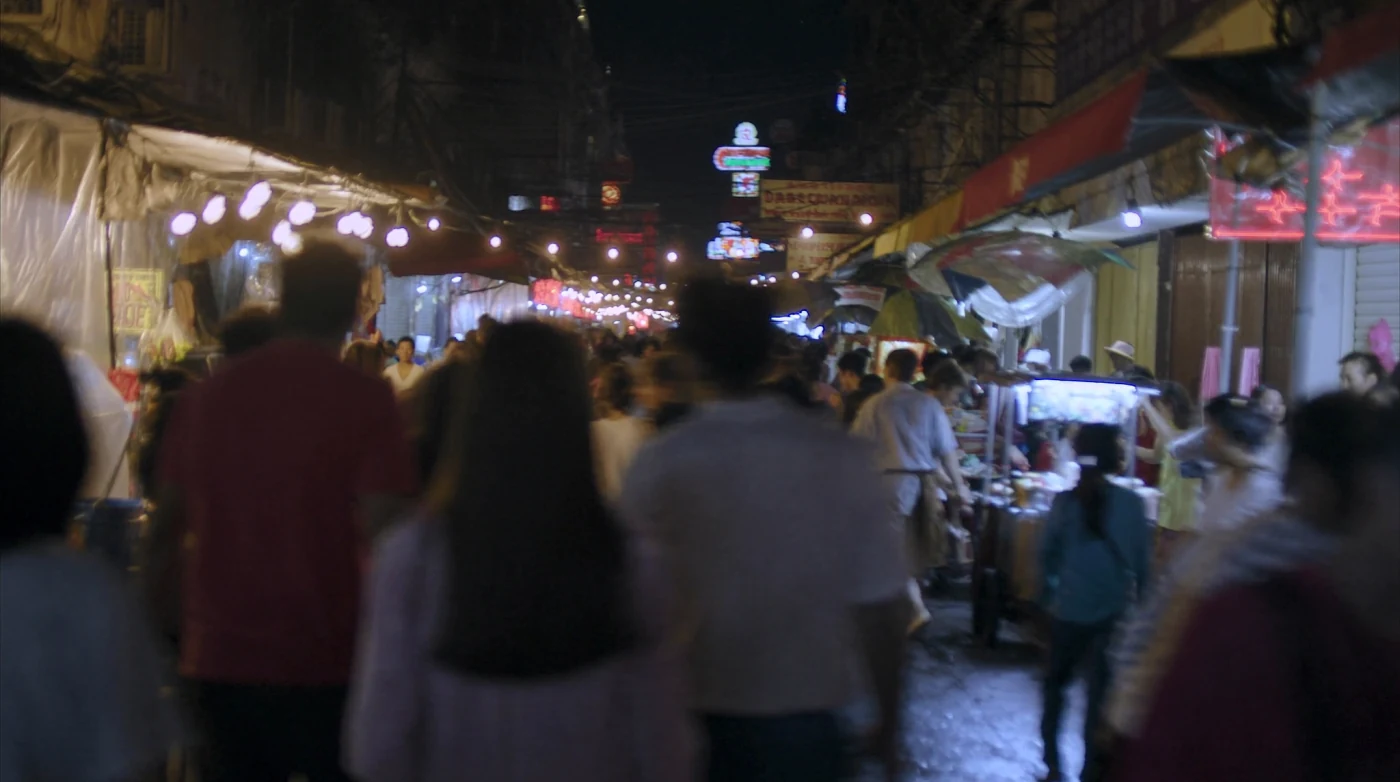
Work one side of Yaowarat outbound and the other on the way back. The queues move faster than they look.
Do it in this order: MRT Wat Mangkon at 5pm, straight to Fikeaw Yaowarat before the queue builds. Toasted bun in hand while walking the market rows. Lhong Tou or a soi noodle shop for the sit-down course around 7pm. Ba Hao Tian Mi for egg pudding. Finish at Sweettime when the crowds peak around 9pm, because dessert seats turn over faster than dinner tables.
Two warnings: Monday is the weak night, with many vendors off. And skip the taxi entirely; the MRT gets you there faster every single time.
Where to go next
Still hungry? The full Bangkok street food guide covers the other legendary districts, and our Bangkok night markets roundup pairs food with shopping across the city. Explore more venues in Chinatown and neighboring Old Town, or browse every listing in our restaurant hub. First time in the city? Start with your first 48 hours in Bangkok.
FAQ
What time should I go to Yaowarat for street food? Arrive between 5pm and 6pm. Most famous stalls open around 5pm, queues are still short, and you catch the neon signs switching on at dusk. By 8pm on weekends the sidewalks are shoulder to shoulder and popular stalls hold 30 to 60 minute waits. The street winds down between 11pm and midnight.
How do I get to Bangkok Chinatown by public transport? Take the MRT Blue Line to Wat Mangkon station; exit 1 puts you one block from Yaowarat Road. This is far faster than a taxi, because traffic around Chinatown at dinner time is among the worst in Bangkok. From Sukhumvit, change from BTS to MRT at Asok/Sukhumvit.
How much does a street food night in Chinatown cost? Budget 300 to 600 baht per person for a full grazing night. Individual dishes run 50 to 150 baht at street stalls, with premium items like grilled river prawns or crab dishes at 300 baht and up. Dessert cafes charge 80 to 150 baht per serving. Cash is king; many stalls take no cards.
Is Chinatown street food safe to eat? Yaowarat stalls have among the highest turnover in Bangkok, which means fresh ingredients and food that never sits. Pick stalls with a queue of locals, watch that food is cooked to order in front of you, and be sensible with raw seafood on your first days in Thailand. Millions eat here every year without issue.
Which days is Yaowarat street food open? The street food scene runs nightly, but Monday is the weak day: many street vendors take it off in line with Bangkok's informal street-cleaning schedule, and some famous stalls close. Tuesday through Sunday evenings are full strength. Check individual venue pages for exact hours before making a special trip.
BangkokGotMe Editorial follows our editorial standards: venue facts are verified, opinions are our own, and we never accept payment for placement on our recommendation lists.