Bangkok Food Itinerary: 24, 48 or 72 Hours of Eating Well
A bangkok food itinerary built as eating routes: morning markets, Yaowarat at night, seafood, coffee and rooftop finale, with real baht costs. Start Day 1.
A charcoal grill at the mouth of a Yaowarat side lane sends up smoke at 7 p.m., a woman turns pork skewers with tongs she has held for thirty years, and twenty baht buys you the best thing you will eat all week. This bangkok food itinerary is built around moments exactly like that one. Three days, structured as eating routes rather than sightseeing lists, with every stop priced in baht.
The plan moves through morning fresh markets, afternoon coffee, evening street crawls and one proper skyline dinner. You never walk more than fifteen minutes hungry.
Read this as a meal sequence, not a schedule
Every day below is written the way you will actually eat it: a small breakfast in three rounds, one long drink that carries you through the heat, then the evening where most of the food happens. Clock times are guidance. The order of the dishes is the plan, because in Bangkok the wrong dish at the wrong hour is the difference between six good stops and two heavy ones.
Eating your way through 24 hours in Bangkok means Day 1 only. With 48 hours, add Day 2. A full three-day food tour of Bangkok runs all three days in order. Each day is a route: one neighbourhood, one direction of travel, four to six stops, and a clear finish near a train station.
Three budget tiers run through every day:
- Street Level (about 600 baht per day): markets, stalls, food courts, iced coffee from a cart.
- Mixed Plates (about 1,800 baht per day): stalls for two meals, one sit-down restaurant, speciality coffee.
- Chef's Table (about 5,000 baht per day): a seafood spread, a skyline dinner, cocktails, taxis between stops.
The three days on a plate:
- 24 hours: Nang Loeng morning market, speciality coffee, Yaowarat night crawl. 550 to 3,200 baht.
- 48 hours: add Ari coffee, Talat Phlu, riverfront seafood. 1,300 to 8,000 baht.
- 72 hours: add Chatuchak grazing, night market or rooftop finale. 2,000 to 13,500 baht.
Day 1: noodles at eight, prawns at eight (24 hours in Bangkok)
Day 1 runs old Bangkok from morning to midnight: a century-old fresh market for breakfast, a champion barista bar at midday, then Chinatown after dark. Expect 550 baht at Street Level, and about six eating stops across roughly twelve hours with two long rests built in.
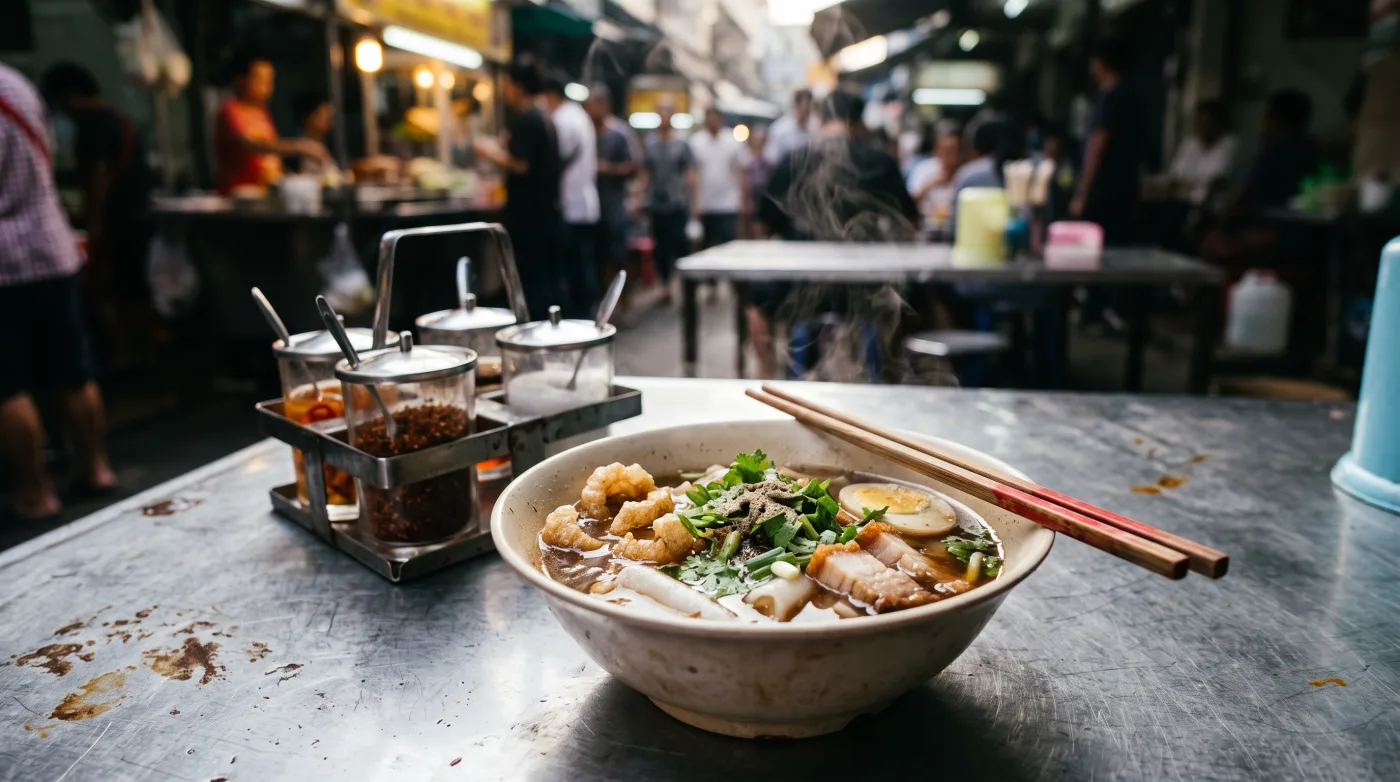
Breakfast noodles land between 50 and 70 baht, and the condiment caddy is where you finish the seasoning yourself.
Kuay tiew moo, khanom krok, kao lam: breakfast in three rounds
Arrive at Nang Loeng Market by 8 a.m., while the cooked-food hall is still filling steam trays. This is one of the oldest fresh markets in the city, rated 4.4 by more than 2,200 reviewers, and it stays a working neighbourhood market rather than a photo stop. Eat in three small rounds instead of one big plate. Start with a bowl of kuay tiew moo (pork noodle soup) for 60 baht, move two stalls along for khanom krok, the coconut pancakes cooked in a dimpled iron pan, at 40 baht for six, then finish with kao lam, sticky rice steamed in bamboo, for 30 baht. Bring cash in twenty and one hundred baht notes, since almost nothing here takes a card and the nearest ATM sits a five-minute walk away on Nakhon Sawan Road. Nothing else here needs more.
Getting there: MRT to Hua Lamphong, then a 10-minute Grab (about 70 baht), or a short ride from BTS Ratchathewi.
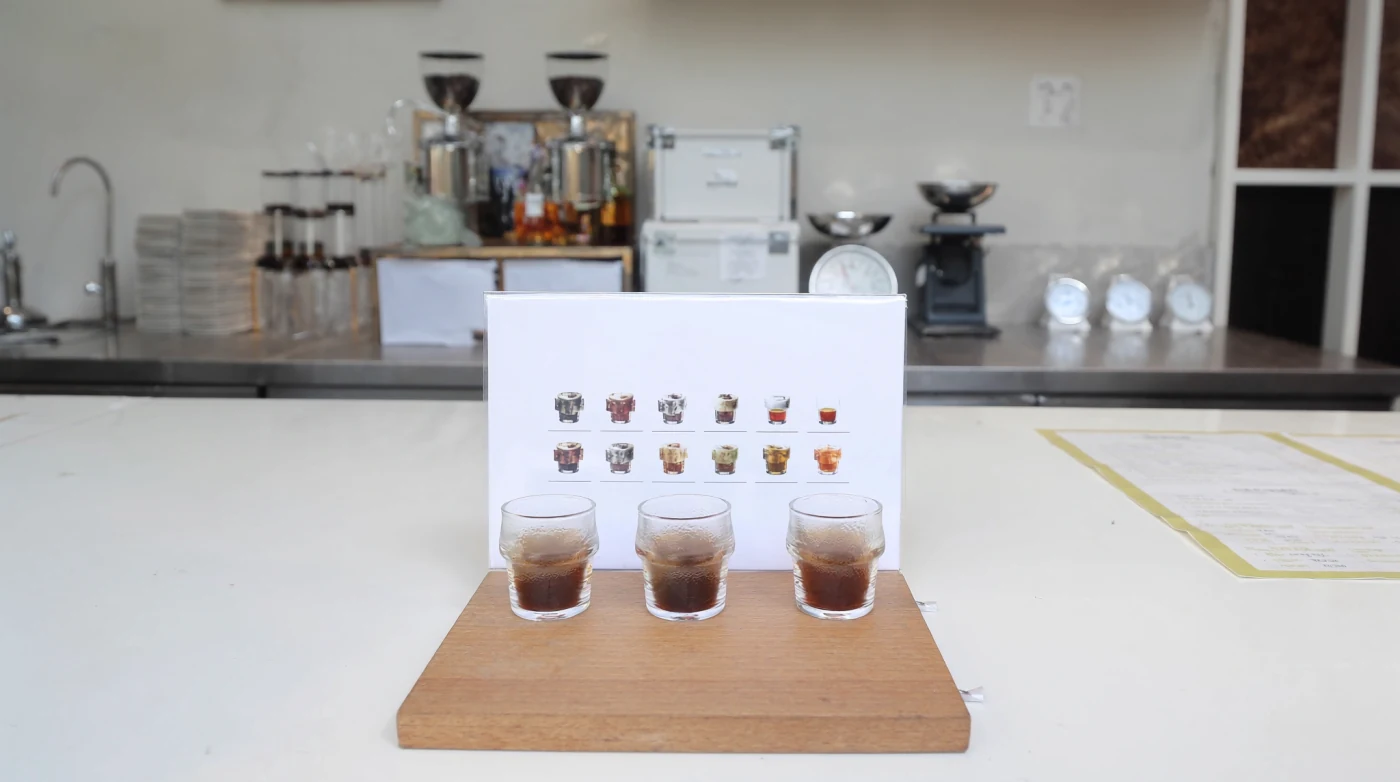
The signature filter flight is 220 baht. Let the barista pick the origin and sit for 45 minutes.
The filter flight that buys you 45 minutes of air-con
Walk back toward Phaya Thai for Factory Coffee BKK, the competition bar that put Bangkok on the world coffee map, rated 4.5 by more than 3,700 reviewers. Order the signature filter flight at 220 baht and let the barista pick the origin. If the heat has already caught you, the espresso tonic at 160 baht does the job faster. Sit for 45 minutes, plan the evening, and let the air-con reset you before the second half of the day. For a wider list of bars worth a detour, our guide to the best coffee shops in Bangkok maps the whole scene by neighbourhood.
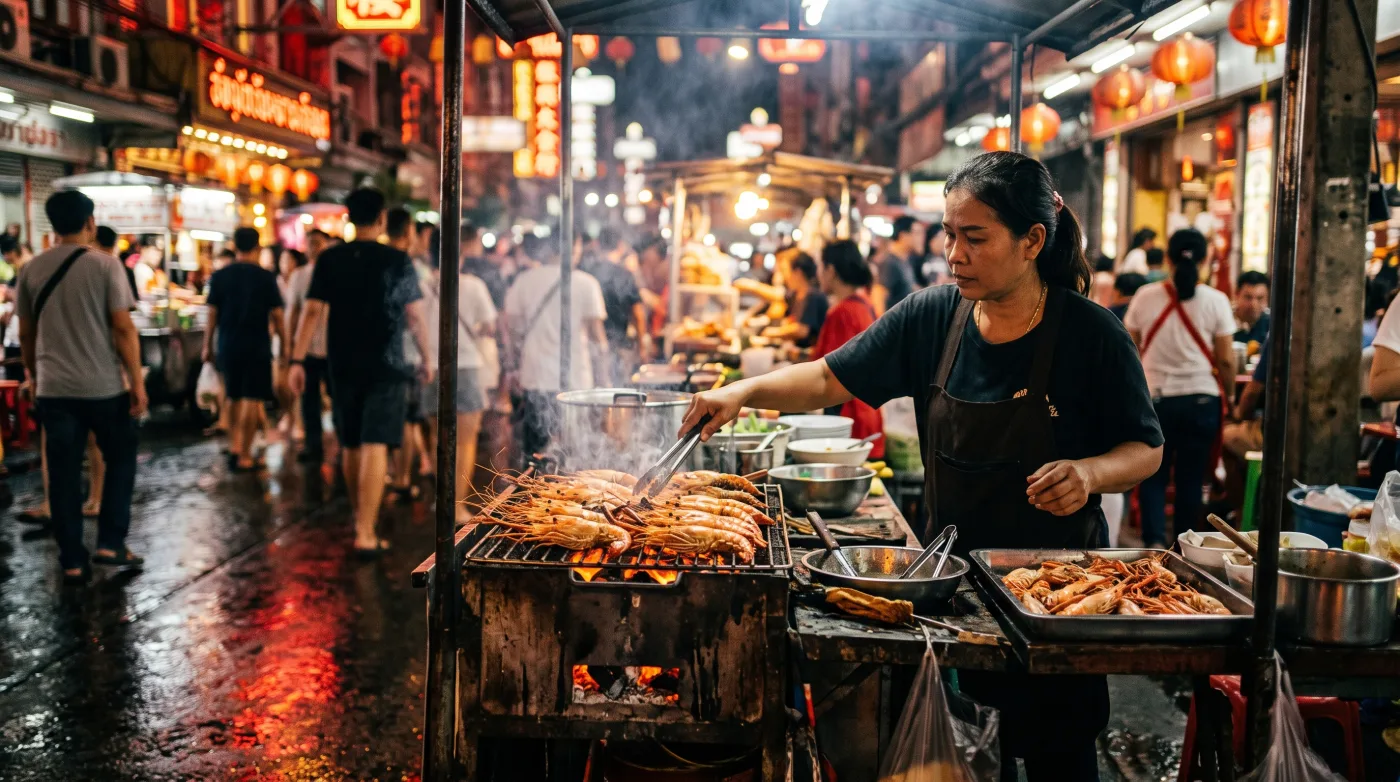
Yaowarat gets going after 18:00, and the charcoal grills are the stalls worth queueing for.
Grilled prawns, kuay jab, then mango sticky rice: one dish per stall
At 6:30 p.m. take the MRT to Wat Mangkon (about 30 baht) and start walking east through Chinatown Bangkok as the signs light up. Treat Yaowarat Road as a tasting menu with the courses spread over one kilometre. Grilled prawns at the corner carts run 120 to 200 baht a plate. Kuay jab, the peppery rolled noodle soup with crispy pork belly, costs 70 baht and is the single dish most people fly back for. Guay tiew kua gai, chicken fried flat noodle with egg, runs 80 baht. Finish with mango sticky rice at 80 baht or a bowl of shaved ice with red beans at 50.
Pace matters more than choice here. Order one dish per stall, share everything, and keep walking between rounds. A four-stop crawl comes to 300 to 400 baht per person and takes about two and a half hours. Our dedicated Chinatown street food guide names specific stalls and their opening nights if you want a fixed route rather than a wander.
Eating is the whole point of this trip. Browse every restaurant we cover in the BGM restaurant directory and slot one wildcard into your own Day 1.
Day 2: pour-over, roast duck, then a crab spread (48 hours in Bangkok)
Day 2 crosses the modern city and then the river: Ari for morning coffee, Thonburi for a local food market that sees almost no visitors, and a riverfront seafood buffet to finish. Budget 1,300 baht at Street Level and about 1,900 baht per person for the seafood spread on the top tier.
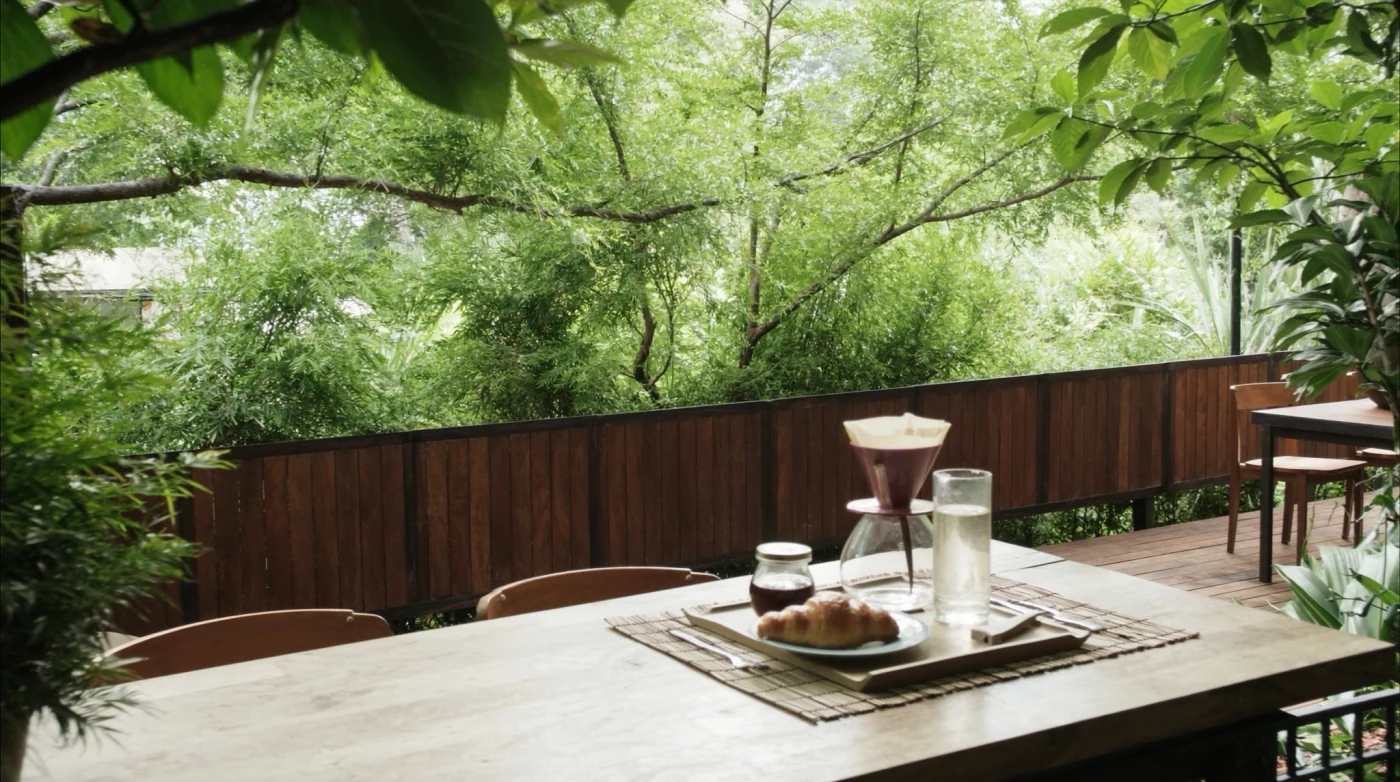
The house pour-over costs 150 baht. Take the outdoor seat, then walk Ari Soi 1 through 4 for an hour.
House pour-over and a croissant, then 60 baht rice plates down the soi
Start at 9 a.m. at NANA Coffee Roasters Ari, a garden-set roastery in the leafiest pocket of Phaya Thai, rated 4.4 by more than 2,600 reviewers. The house pour-over costs 150 baht and the roast list changes every few weeks. Take the outdoor seat under the trees, order a croissant at 120 baht, and then walk Ari Soi 1 through 4 for an hour. This is where Bangkok professionals eat breakfast, so the noodle shops and rice-and-curry counters along the sois serve honest 60 to 90 baht plates all morning.
Getting there: BTS Ari, then a five-minute walk. From Sukhumvit the ride costs 33 to 44 baht.
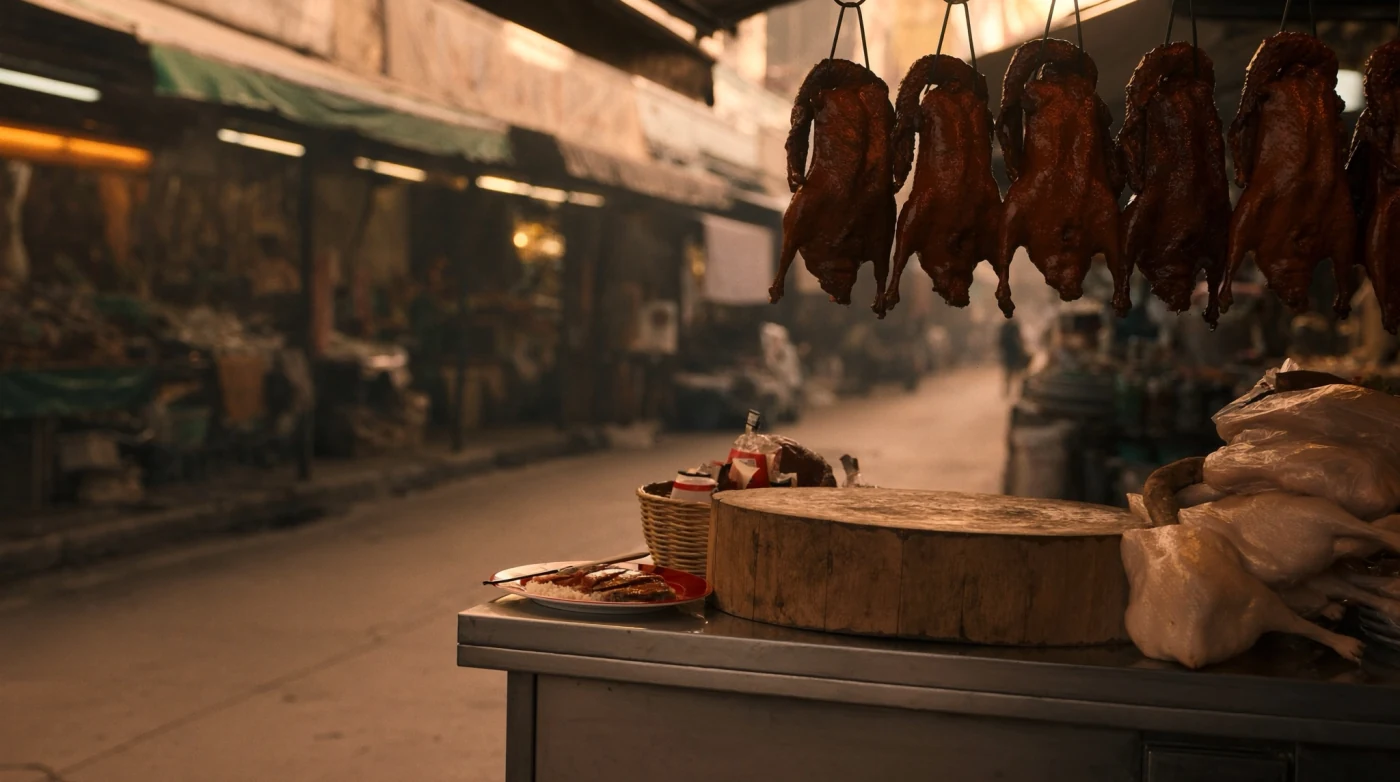
Roast duck over rice runs 70 baht. Set aside 200 baht and eat small portions across six or seven stalls.
Roast duck over rice at 70 baht, then luk chup by the handful
Cross the river in the afternoon to Talat Phlu food market, rated 4.5 by more than 4,700 reviewers and still mostly a market for the people who live around it. The specialities here are grilled river fish, roast duck over rice at 70 baht, and a long row of Thai dessert vendors selling luk chup, the marzipan-style fruits shaped by hand. Set aside 200 baht and eat in small portions across six or seven stalls. The market runs all afternoon and gets busiest from 5 p.m.
Getting there: BTS Silom Line to Talat Phlu station, then a three-minute walk down the stairs and into the lanes. About 40 baht from Sala Daeng.
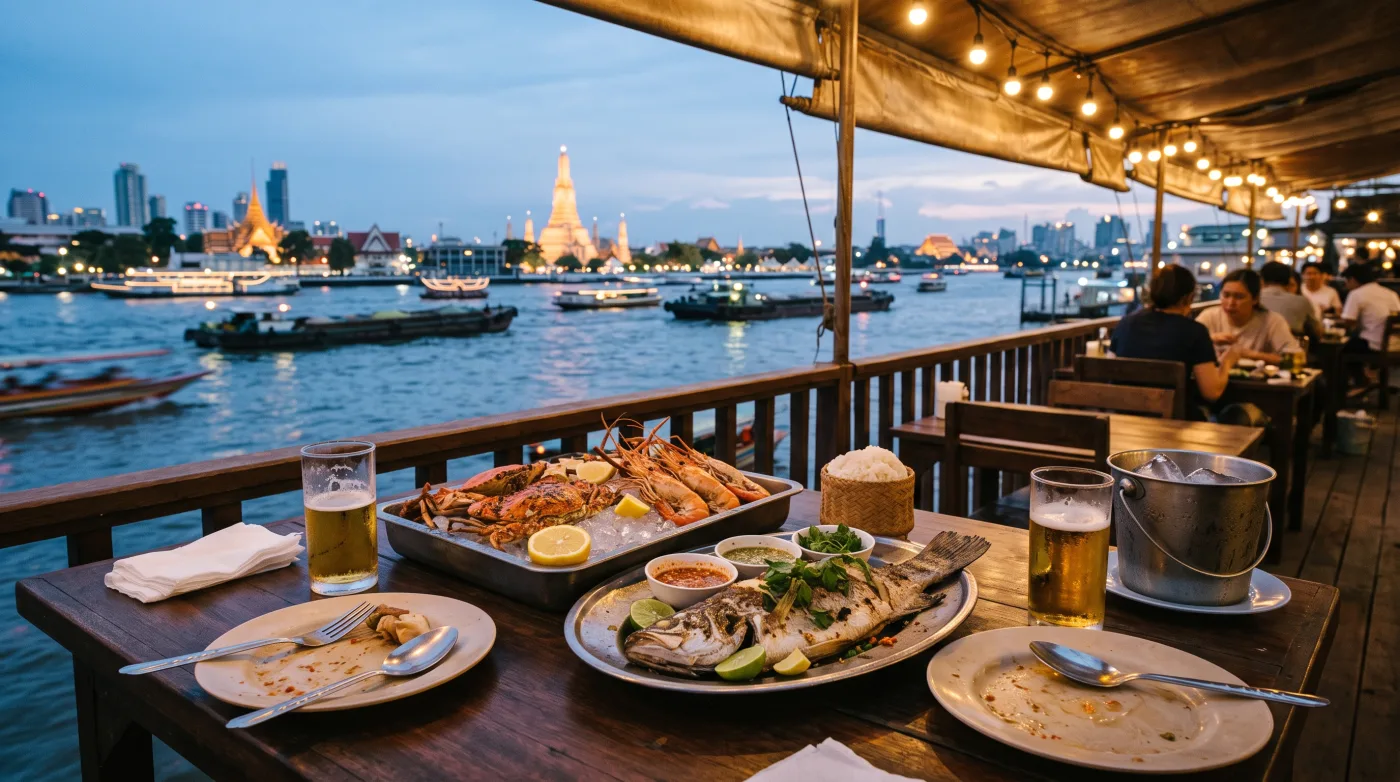
Riverside tables face the Temple of Dawn once the floodlights come on around 18:45.
River prawns first, everything else second
Finish at Kodtalay The Riverfront Seafood Buffet in Sathon, rated 4.9 by more than 42,000 reviewers, which makes it one of the highest-rated large restaurants in the city. The buffet runs river prawns, blue crab, oysters, grilled squid and a Thai hot pot station for roughly 900 to 1,200 baht per person depending on the night. Book the 6 p.m. sitting for the river light and go straight for the grilled prawns first, since the queue at that station doubles after 7. Street Level eaters take the same evening on Charoen Krung Road instead, where a plate of pad thai kung sod costs 90 baht with the same river breeze.
Travelling on a tight budget? The Bangkok backpacker itinerary runs these same neighbourhoods at half the spend.
Day 3: small bites all morning, one big finish (72 hours in Bangkok)
Day 3 is the grazing day: Chatuchak or a weekday market in the morning, a long rest through the heat, then either a train-yard night market or a skyline dinner. Plan 400 baht of market grazing money, plus 250 baht of transport, plus whichever finale you pick.
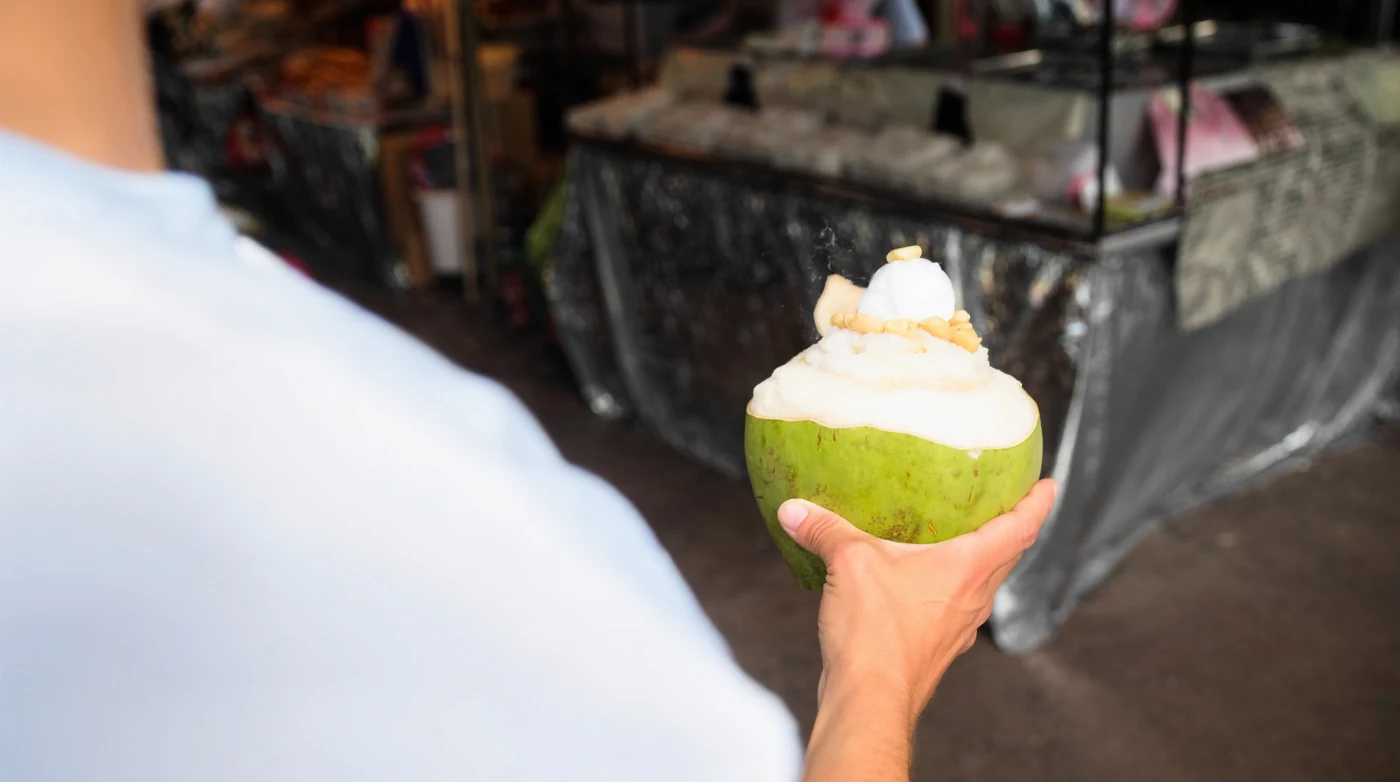
Coconut ice cream in the shell runs 60 baht. Two hours of steady grazing costs about 350 baht.
Coconut ice cream, grilled squid, som tam: eat the market, do not shop it
On a weekend, ride the BTS to Mo Chit (up to 62 baht) and walk into Chatuchak Weekend Market, rated 4.4 by more than 54,000 reviewers across its 15,000 stalls. Eat rather than shop. The food lanes in sections 6 and 8 serve coconut ice cream in a young coconut shell at 60 baht, grilled squid at 100 baht, som tam pounded to order at 70 baht, and Thai iced tea at 40. Two hours of steady grazing costs about 350 baht and beats any single sit-down lunch in the area. Go between 9 and 11 a.m. while the lanes are still walkable.
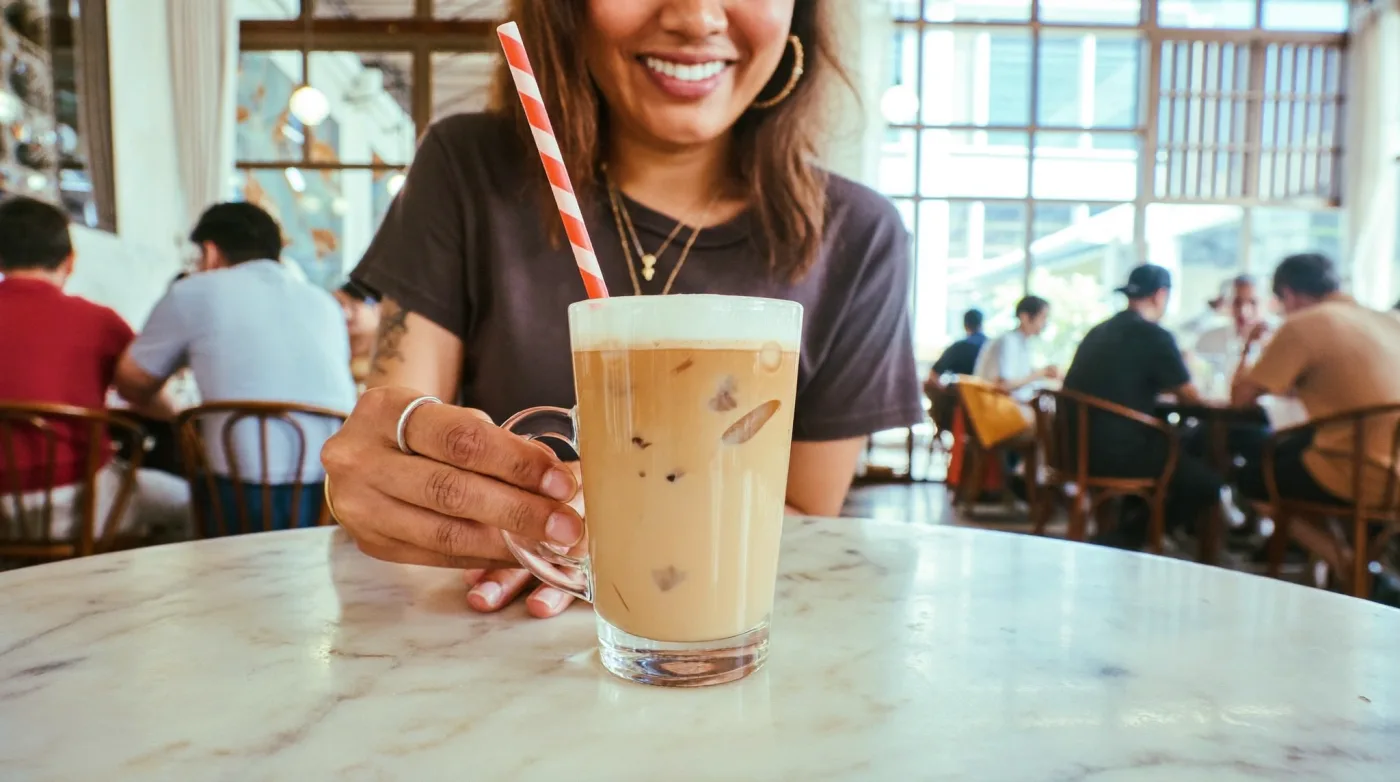
Eating well in Bangkok is a stamina exercise. The 1 p.m. to 4 p.m. heat is exactly when to sit still.
One iced coffee and no food at all, from 1 p.m. to 4
Take the middle of the day off. Eating well in Bangkok is a stamina exercise, and the 1 p.m. to 4 p.m. heat is exactly when to sit in a hotel or a mall food hall with an iced coffee and nothing scheduled.
Then pick one of two endings.
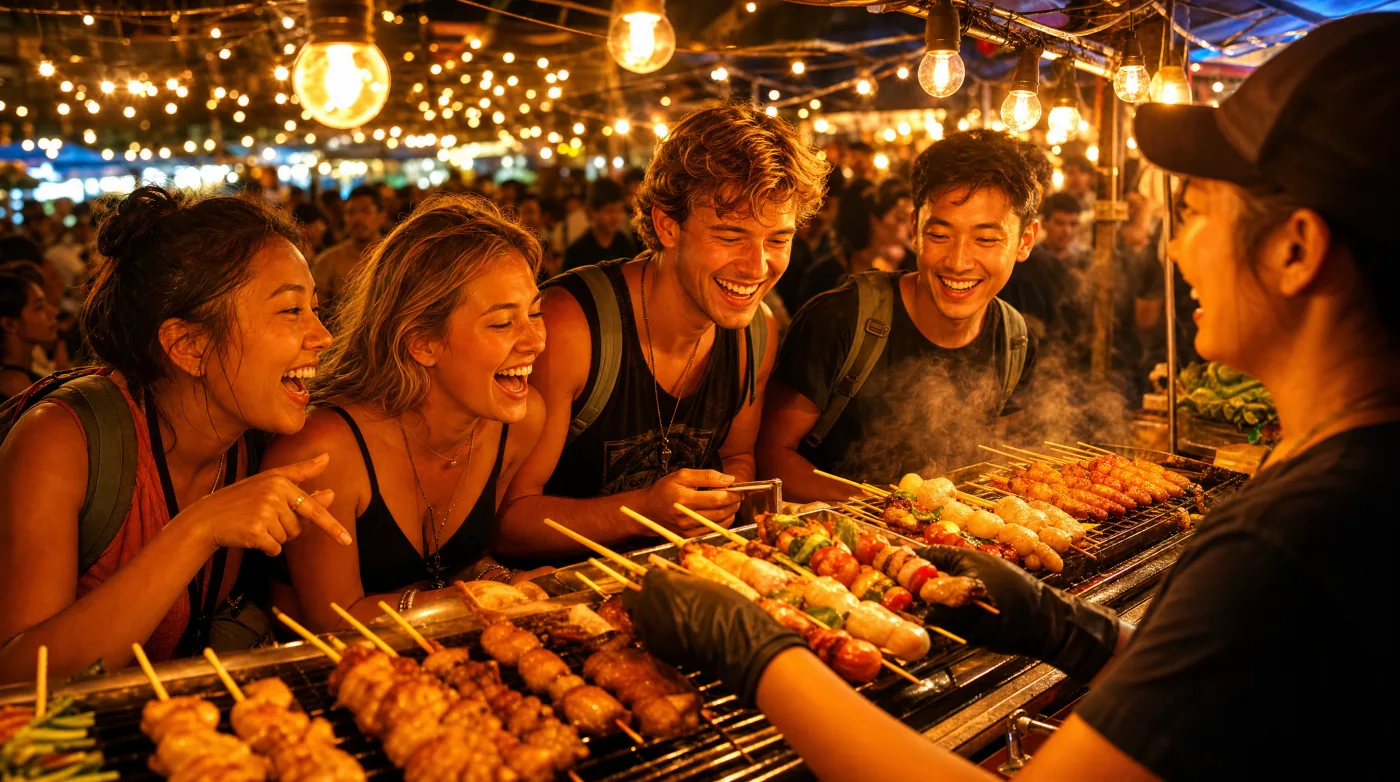
A full evening including drinks runs 400 to 600 baht per person. It trades Thursday to Sunday.
Finish A: leng saep and grilled scallops in a rail yard
For the market ending, head to Train Night Market Srinagarindra, rated 4.4 by more than 17,800 reviewers, where hundreds of food stalls fill a former rail yard behind Seacon Square from Thursday to Sunday. The signature order is leng saep, a peppery pork spine soup, at 150 baht, followed by grilled scallops at 100 baht for six. A full evening including drinks runs 400 to 600 baht per person. Take a Grab from Sukhumvit for about 250 baht, since the market sits east of the BTS network. Our Bangkok night markets guide compares the main ones by night of the week.
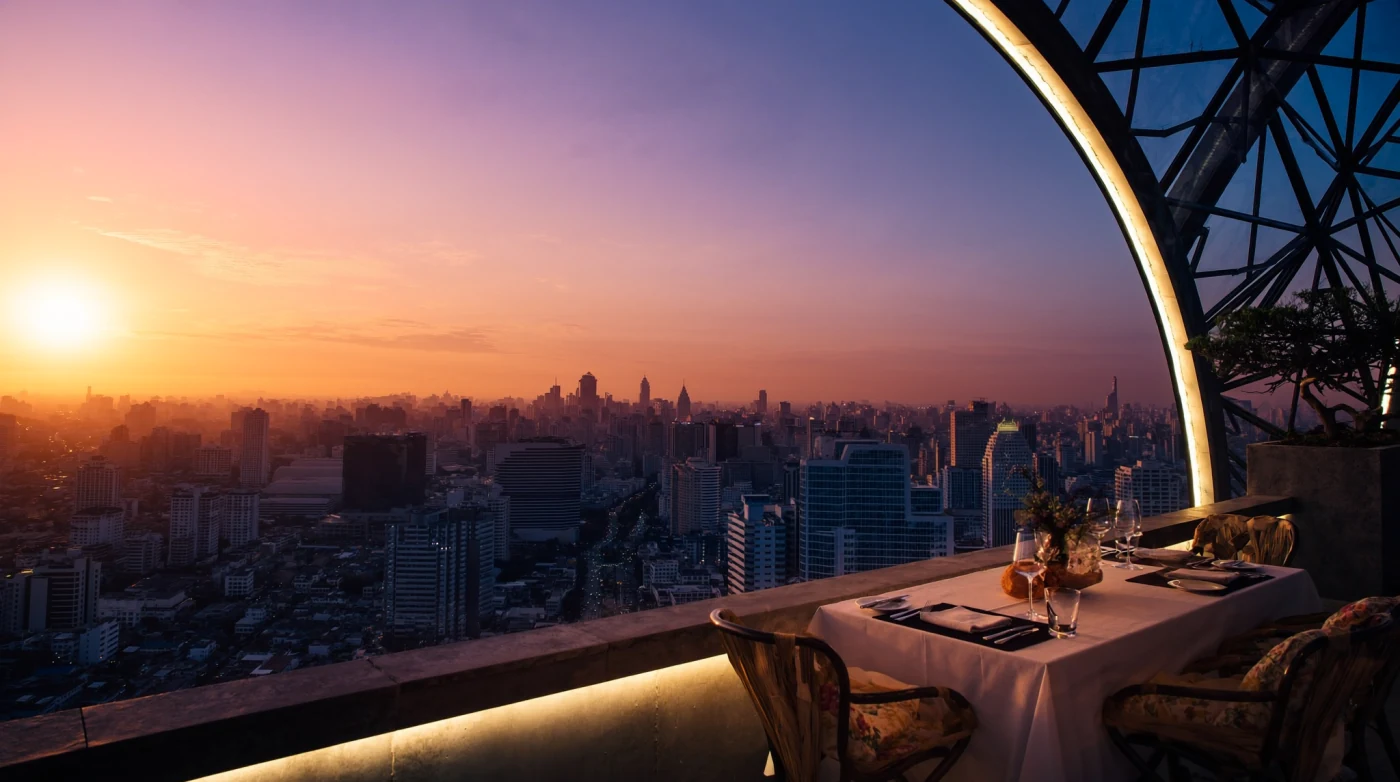
Reserve the 6 p.m. seating for sunset over Siam, and wear smart casual with closed shoes.
Finish B: proper grill work and a wine list, 55 floors up
For the skyline ending, book Red Sky on the 55th floor above Ratchaprasong, rated 4.5 by more than 4,300 reviewers. The wine list is the deepest of any Bangkok rooftop and the kitchen sends out proper grill work rather than snack plates. A three-course dinner with a glass of wine lands around 2,800 to 3,500 baht per person. Reserve the 6 p.m. seating for sunset over the Siam skyline, and wear smart casual with closed shoes. BTS Chit Lom, then a covered walkway straight into the tower.
How to pace it, and what to order when
Most people who come to Bangkok to eat lose the trip on Day 1, somewhere around the second full plate of the evening. The city rewards small portions ordered often, and it punishes the sit-down lunch that costs you the entire afternoon.
Six rules that hold across all three days:
- One dish per stall, shared. A crawl of four stalls at 80 baht a plate beats one 400 baht restaurant plate, and you taste four times as much. Order, split, walk, repeat.
- Soup and noodles before 10 a.m., grilled and fried after dark. Thai breakfast is broth-based for a reason. Charcoal work belongs to the evening, when the grills are lit and the stalls have turnover.
- Nothing heavy between noon and 3 p.m. The heat does the digesting for you and it does it badly. That window is iced coffee, shaved ice, or a mall food hall with the air-con on.
- Go where the queue is Thai and moving. A long static queue is a viral stall. A short queue that clears every two minutes is a stall that cooks 200 plates a night and has done for a decade.
- Sweet finishes the round, not the night. Mango sticky rice at 80 baht or shaved ice at 50 resets the palate between savoury stops. Save one for the walk back to the station.
- Stop at 70 percent full, every single time. There is always another stall in the next hundred metres, and the best thing you eat is rarely the first thing you eat.
If you only remember one order in the whole guide, make it kuay jab on Yaowarat: peppery broth, rolled noodles, crisp pork belly, 70 baht. It is the dish people plan a return flight around.
What three days of eating costs
All numbers in baht per person, food and drink plus local transport.
| Day | Street Level | Mixed Plates | Chef's Table |
|---|---|---|---|
| Day 1: markets and Yaowarat | 550 | 1,150 | 3,200 |
| Day 2: Ari, Talat Phlu, seafood | 700 | 1,600 | 4,800 |
| Day 3: Chatuchak plus finale | 700 | 1,400 | 5,500 |
| 72 hour total | 1,950 | 4,150 | 13,500 |
Trimming is easy: swap one restaurant dinner for a market crawl and the day drops by roughly 1,200 baht. Upgrading is just as simple, since a single rooftop dinner adds about 3,000 baht per person on its own. The sweet spot for most food travellers is Mixed Plates, where street stalls handle breakfast and lunch and the budget goes to one memorable table each night.
Walking between courses
Every stop above sits within a ten-minute walk of a BTS or MRT station except Train Night Market Srinagarindra. Single train fares run 17 to 62 baht, and a Rabbit card saves queueing at every gate. Our BTS and MRT guide covers cards, interchanges and the lines worth knowing, while the wider getting around Bangkok guide adds boats, motorbike taxis and Grab pricing.
Carry 1,000 to 1,500 baht in small notes daily. Street stalls run on cash and Thai QR payment, so hundred baht notes make every transaction faster. Check the current rate before you swap money using our where to exchange money in Bangkok guide, since the airport counters and the city exchange booths differ by two to three percent.
Get a data SIM on arrival for 300 to 600 baht so you can pull up stall locations and call a Grab from a lane with no street sign. The Thai SIM card guide compares the current tourist packages. For a broader survey of dishes and where each one is done best, read the Bangkok street food guide alongside this plan.
Eating as a couple and want the pace slower? The Bangkok couples itinerary rebuilds these days around long dinners. First trip to the city and want the temples too? Start with the first-timer itinerary.
FAQ
How much does a day of eating in Bangkok cost? A full street food day runs 400 to 600 baht per person across four or five stops. Mixing markets with one sit-down restaurant lands around 1,500 to 1,800 baht. Adding a rooftop dinner with drinks pushes the day to 4,000 to 5,000 baht.
Is Bangkok street food safe to eat? Yes, with one simple filter: eat where the stall is busy and the wok is running. High turnover means fresh ingredients and hot food. Grilled, fried and boiled dishes made to order are the safest picks, and bottled water costs 10 to 20 baht everywhere.
What time do Bangkok food markets open? Fresh morning markets like Nang Loeng run from about 6 a.m. to 2 p.m. Yaowarat street stalls in Chinatown fire up around 6 p.m. and run past midnight. Night markets such as Train Night Market Srinagarindra open around 5 p.m., Thursday to Sunday.
What should I eat first in Bangkok? Start with boat noodles (60 baht), then grilled pork skewers with sticky rice (20 baht each), then a plate of pad krapow moo with a fried egg (70 to 90 baht). Those three cover the sweet, sour, salty and heat balance that defines Thai cooking.
Do I need cash for Bangkok food markets? Carry 1,000 to 1,500 baht in small notes per day. Most street stalls take cash or Thai QR payment only, while sit-down restaurants and rooftops accept cards. ATM withdrawals charge a 220 baht foreign card fee, so take out larger amounts less often.
Swap any single dish above for one you find yourself. Every restaurant, market and food hall we have eaten at →
Book nothing for tomorrow lunchtime. Walk into the busiest stall you pass and order what the person ahead of you ordered.